

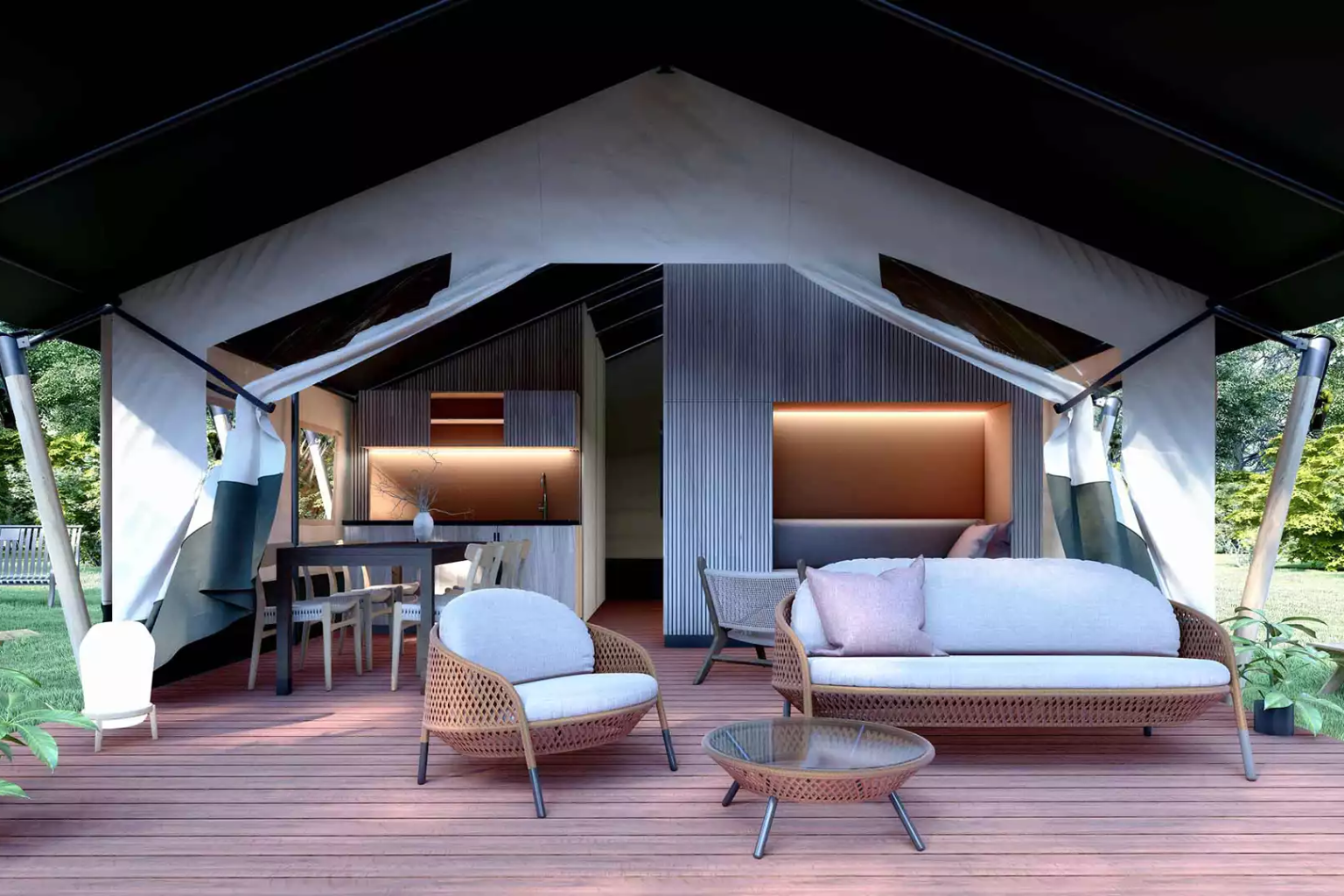
Outdoor hospitality is evolving. Guests still seek out nature, but they also expect comfort, privacy, and a design that feels well-thought-out. For campground owners, eco-lodge operators, and resort developers, this raises a practical question: how do you add high-quality accommodations without a long and complex construction process?
Safari lodge tents are a strong solution for this. They offer a boutique experience in a lightweight structure, often with faster planning and installation than traditional cabins, depending on the location and local regulations.
What makes safari lodge tents different
A safari lodge tent is not a simple camping tent. The concept is typically built around a sturdy frame, durable fabric, and a raised floor system. The goal is a hospitality-ready unit that looks natural in its surroundings but feels like a full-fledged room.
Benefits that matter to operators:
– A strong guest experience and a clear wow factor
– Flexible placement in scenic locations where permanent construction is less desirable
– A premium look and feel that supports higher nightly rates
– Opportunities to extend the season with appropriate ventilation and insulation
Because these units are photogenic and offer a distinctive experience, they often boost marketing and booking conversion rates as well.
Layout and comfort options to determine in advance
The best results are achieved when the specifications align with your target audience and climate. A couples’ retreat, a family glamping site, and a safari-style resort each require different choices in layout and finishes.
Common configuration choices:
– Sleeping capacity and degree of separation between spaces
– Covered terrace or veranda for outdoor living
– Space planning for storage, seating areas, and logical walking routes
– Extras such as a kitchenette or an en-suite bathroom
– Material choices for fabric, flooring, and weather protection
For an overview of models and configuration options, please visit Safari Lodge Tents.
A project checklist before you order
Treat the rollout of lodge tents as a small-scale construction project. This will help prevent delays and surprises.
1. Site basics: accessibility, drainage, wind loads, and utility connections.
2. Unit mix: number of units, capacity, and the level of comfort you want to offer.
3. Permits: check local requirements for temporary structures, fire safety, and sanitation.
4. Lead time: confirm production and delivery times early, especially if opening near peak season.
5. Installation plan: foundation or anchoring, assembly schedule, and handover to the maintenance team.
This approach also helps with budgeting. Higher specifications cost more, but can improve ADR and occupancy if your market supports premium pricing.
Maintenance tips to protect your investment
Lifespan depends on material selection and routine. A few practical habits make a clear difference:
– Keep drainage clear to limit splashing water and moisture issues.
– Ventilate regularly to reduce condensation, especially in humid regions.
– Clean the fabric only with approved methods to protect coatings.
– Check anchoring after storms and retighten where necessary.
Next steps
Safari lodge tents help outdoor hospitality businesses expand more quickly with a premium, nature-focused offering. Develop your concept, assess your location, and choose specifications that align with the climate and guest expectations. With a clear plan, you can add units that guests appreciate and that perform well operationally.
Finally, map out the guest journey, from parking and check-in to the terrace. Details such as lighting, pathways, and smart storage reduce the number of complaints and protect your reviews. When the unit, location, and service flow are right, a lodge tent becomes more than just accommodation: it becomes the experience that guests remember and recommend.