

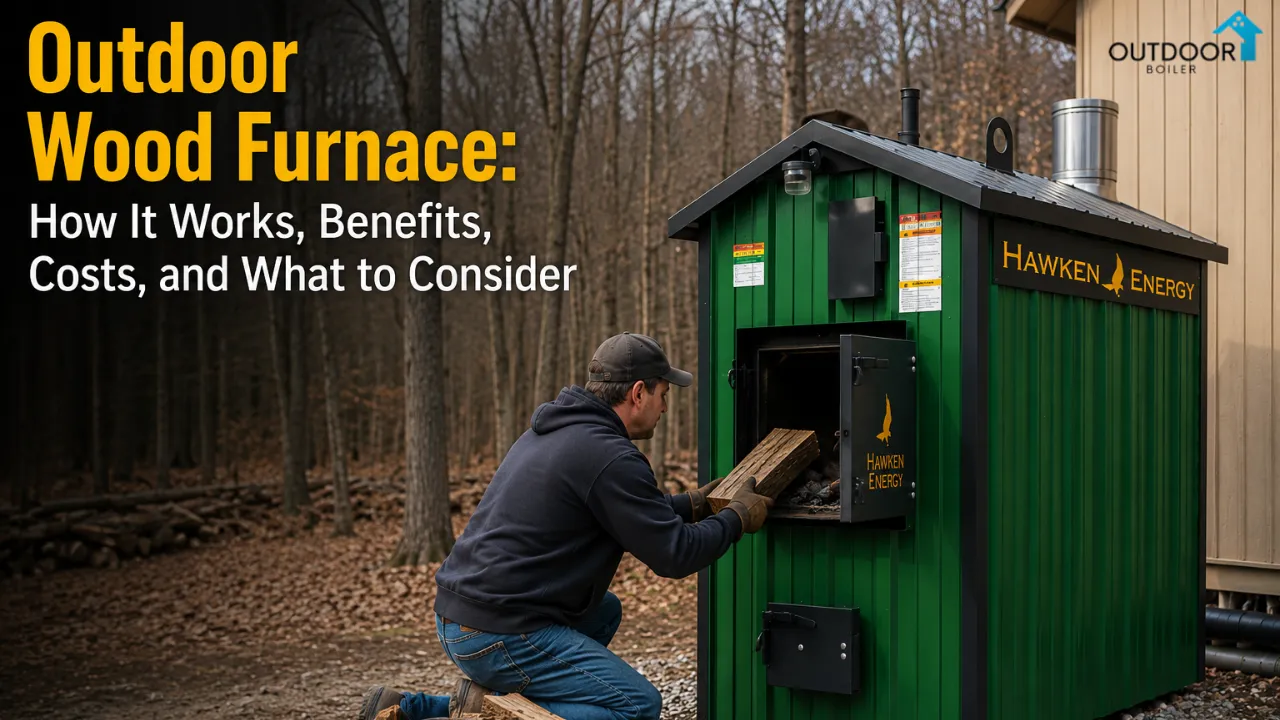
If you have ever wondered how those large outdoor wood-burning units can heat an entire house, garage, workshop, or even several buildings, the answer is fairly straightforward. Instead of sending warm air directly into the building, an outdoor wood furnace heats water and sends that heated water where it is needed.
That basic idea makes the system different from a traditional indoor wood stove. It also explains why outdoor wood furnaces are often considered for larger properties, rural homes, workshops, barns, and other spaces that need substantial heat.
What Is an Outdoor Wood Furnace?
An outdoor wood furnace, sometimes called an outdoor wood boiler or wood-fired hydronic heater, is a heating appliance installed outside the building it serves.
The furnace burns wood inside a firebox. Heat from the fire is transferred to water or, depending on the system, a water and antifreeze mixture. A circulating pump then moves the heated liquid through underground piping to the building.
Inside the building, that heat can be transferred through several types of heating equipment, including radiators, baseboard heaters, radiant floor systems, air handlers, or heat exchangers.
The US Environmental Protection Agency describes hydronic heaters as systems that typically burn wood to heat water or a water and antifreeze solution, which is then circulated through pipes to provide heat and hot water to buildings such as homes, barns, and greenhouses.
In simple terms, the process looks like this:
Wood → Fire → Heated water → Underground piping → Heat exchanger or heating system → Warm building
It is a relatively simple concept, although the actual system design can become more complex depending on the size of the property and how many buildings need heat.
How Does an Outdoor Wood Furnace Work?
Understanding how an outdoor wood furnace works can make it easier to decide whether this type of heating system makes sense for your property.
1. Wood is loaded into the firebox
The process begins when firewood is placed inside the furnace’s firebox.
The size of the firebox varies from one model to another. Larger systems can accommodate more wood and are generally designed to provide heat for larger buildings or multiple structures.
The type and condition of the wood matter as well. Properly seasoned firewood generally burns differently from freshly cut or very wet wood, so fuel preparation can have a noticeable effect on system performance.
2. The fire heats the boiler water
As the wood burns, the heat is transferred to the water surrounding or passing through the boiler’s heat exchange area.
The heated water becomes the medium that carries energy from the outdoor furnace to the building.
This is one of the biggest differences between an outdoor wood furnace and a traditional wood stove. A wood stove primarily heats the air around it, while a hydronic furnace uses heated liquid to transport energy.
3. A pump circulates the heated water
A circulation pump moves the heated water through underground insulated piping.
The piping connects the outdoor furnace to the building. Depending on the installation, one system may serve a single house or several structures.
For example, a property could potentially use one furnace to provide heat to a house, garage, workshop, and barn, provided the system has been properly sized and designed for the total heating demand.
4. Heat enters the building
Once the heated water reaches the building, it transfers its heat through the existing or newly installed heating equipment.
A heat exchanger can transfer the heat to air, while radiant floors and hydronic radiators can use the hot water more directly.
The cooled water then returns to the outdoor furnace, where it is heated again.
This creates a continuous heating loop.
What Can an Outdoor Wood Furnace Heat?
One of the reasons people consider outdoor wood furnaces is their ability to serve more than one heating zone or building.
Depending on the system design, an outdoor furnace may provide heat for:
-
A primary residence
-
A detached garage
-
A workshop
-
A barn
-
A greenhouse
-
A guest house
-
Multiple buildings on one property
-
Domestic hot water
The EPA notes that hydronic heaters can be used for homes, barns, greenhouses, and garages.
However, heating multiple buildings does not automatically mean that one furnace will work for every property. The system needs to be properly sized according to the buildings’ heat loss, insulation, square footage, climate, piping distance, and heating requirements.
Oversizing and undersizing can both create problems, which is why system design deserves as much attention as the furnace itself.
Benefits of an Outdoor Wood Furnace
An outdoor wood furnace is not the right choice for everyone, but it offers several potential advantages.
1. It keeps the main fire outside
For homeowners who prefer wood heat but do not want to bring a wood-burning appliance into the living area, an outdoor furnace offers a different approach.
The fire, ash, smoke, and wood loading activity take place outside the main building.
That can also make handling large quantities of firewood more practical on some rural properties.
2. One system can serve multiple buildings
A properly designed system can distribute heat to several structures.
This can be particularly useful for people who have a house along with a workshop, garage, barn, or other heated building.
Instead of maintaining separate wood heating appliances in each structure, a central outdoor system can distribute heat through underground piping.
3. It can use locally available firewood
For property owners who have access to suitable firewood, wood can be an accessible heating fuel.
The economics, however, depend heavily on the local cost of wood, the amount required, equipment efficiency, and the labor involved in cutting, splitting, drying, and moving the fuel.
Free wood is not necessarily free heat if it requires significant time, equipment, transportation, and storage.
4. It can work with different heating systems
Hydronic heat can be connected to several types of indoor heating equipment.
That flexibility means an outdoor furnace may sometimes be incorporated into an existing heating system rather than requiring an entirely new indoor distribution system.
The exact setup depends on the building and existing equipment.
5. It can provide more than space heating
Some systems can also contribute to domestic hot water.
This can make an outdoor furnace part of a broader heating strategy rather than simply a replacement for a traditional furnace.
The system must be designed appropriately, however, especially when domestic hot water is involved.
What Are the Disadvantages?
It is just as important to look at the drawbacks.
An outdoor wood furnace requires more than simply buying a furnace and stacking wood beside it.
Wood requires work
Someone still has to obtain the wood, cut it if necessary, split it, season it, move it, and load the furnace.
For some homeowners, this is perfectly manageable. For others, it becomes a significant seasonal responsibility.
If you purchase firewood, fuel costs can also vary substantially from one location to another.
You need adequate space
The furnace itself requires outdoor space, and the property also needs somewhere to store firewood.
You also need to consider the route of the underground piping and the location of the buildings being heated.
A property with limited outdoor space may not be a practical candidate.
Maintenance is part of ownership
Wood combustion produces ash and deposits that need attention.
The furnace, chimney or venting system, water treatment system, pumps, piping, and heat exchangers may all require periodic inspection or maintenance.
Water quality is particularly important for systems that use a water jacket. Poor water chemistry can contribute to corrosion and other problems.
Smoke and emissions matter
Wood combustion produces particulate pollution. Older or less efficient equipment can produce substantially more emissions than newer technology.
The EPA established federal emissions standards for new wood-fired hydronic heaters and has emphasized the importance of cleaner combustion technology.
This is one reason it is important to look beyond the purchase price when comparing outdoor wood furnaces.
A cheaper unit is not necessarily the better long-term choice if it uses considerably more wood or produces more smoke.
How Much Does an Outdoor Wood Furnace Cost?
Cost is one of the most common questions people have before considering an outdoor wood furnace.
There is no universal price because the total project can include much more than the furnace itself.
Current US cost estimates vary, but HomeAdvisor reports an average installed cost of about $12,000, with a typical range of approximately $8,000 to $20,000. HomeGuide reports a similar overall range, with an estimated national average of about $12,500 for an installed outdoor wood furnace or boiler.
These figures should be treated as general planning estimates rather than a quote for a specific property.
Your actual cost can depend on:
-
Furnace size
-
Furnace technology
-
Installation labor
-
Underground piping distance
-
Insulated pipe requirements
-
Pumps and controls
-
Existing heating equipment
-
Electrical work
-
Site preparation
-
Permits
-
Water treatment
-
Wood storage
-
Number of buildings being heated
A longer distance between the furnace and the building can increase installation complexity. Similarly, heating several buildings requires more extensive piping and system design than heating one small home.
What About the Cost of Firewood?
The installation is only one part of the financial equation.
You should also estimate your annual fuel requirements.
The cost of firewood varies dramatically depending on your location and whether you purchase it or harvest it yourself.
If you buy firewood, ask about how the seller measures a cord, whether the wood is seasoned, what species are included, and whether delivery is included.
If you harvest your own wood, consider the cost of chainsaws, splitters, trailers, fuel, maintenance, and your time.
A realistic calculation should therefore look beyond the price of a cord of wood.
Consider:
Annual wood cost + equipment costs + maintenance + electricity + your time
That gives you a more realistic picture of the ongoing expense.
What Is the Difference Between a Standard Outdoor Wood Boiler and a Gasification Boiler?
Not every outdoor wood furnace burns wood in the same way.
Traditional systems burn wood and transfer the resulting heat into the boiler system. Gasification systems use a more controlled combustion process that can burn wood gases at high temperatures.
The technology can affect fuel consumption, emissions, operating requirements, and purchase price.
Some current cost estimates place standard outdoor wood boiler installations below the cost of high-efficiency wood gasification systems, although the exact figures vary significantly by model and installation.
When comparing systems, it is worth looking at more than the initial price.
Ask about:
-
Tested efficiency
-
Emissions performance
-
Recommended fuel moisture
-
Firebox capacity
-
Expected wood consumption
-
Maintenance requirements
-
Warranty
-
Replacement parts
-
Local service availability
-
System controls
A higher purchase price can sometimes make sense if the equipment delivers meaningful improvements in efficiency, durability, or operating convenience. But the numbers should be evaluated for your particular situation.
What Kind of Wood Should You Burn?
Fuel quality can make a major difference.
In general, firewood should be properly seasoned before it is burned. Wet wood contains more moisture, which means some of the energy from combustion is used to evaporate that water rather than producing useful heat.
Hardwoods are commonly used because they can provide substantial heat per unit of volume, although the best available wood depends on your region and equipment.
Always follow the furnace manufacturer’s fuel recommendations.
Do not assume that because a piece of wood burns, it is appropriate fuel for every outdoor furnace. Read more HERE.
Safety and Local Regulations
An outdoor wood furnace is still a combustion appliance, so safety should never be an afterthought.
Before installation, check your local requirements for:
-
Furnace placement
-
Property setbacks
-
Chimney or stack height
-
Smoke emissions
-
Permits
-
Wood storage
-
Fire safety
-
Insurance requirements
-
Water system requirements
Local regulations can vary considerably.
The EPA also recommends checking state and local ordinances when choosing a hydronic heater.
It is also worth checking with your homeowner’s insurance provider before installation. Some insurers may have specific requirements regarding the location or type of outdoor wood heating equipment.
Final Thoughts: Is an Outdoor Wood Furnace Worth Considering?
An outdoor wood furnace can be a practical heating option for the right property, particularly when there is a reliable supply of firewood and several spaces need to be heated. But it is not a set it and forget it solution. Installation cost, fuel handling, maintenance, emissions, water treatment, piping, safety, and local regulations all deserve consideration before making a decision.
If you are researching an outdoor wood furnace and want to understand the equipment, installation components, maintenance requirements, or system design before moving forward, take some time to explore the resources available at OutdoorBoiler.com. You can also contact the OutdoorBoiler.com team with specific questions about your planned setup.