


Introduction
If you wake up drenched in sweat despite buying a “cooling” comforter, you’re not alone. The bedding industry floods the market with products promising relief for hot sleepers, but many fail to deliver on their claims. The difference between a restful night and another sweaty wake-up often comes down to understanding what actually regulates temperature versus what simply feels cold for a few minutes. When shopping for a cooling comforter, avoiding these five common mistakes can transform your sleep quality and help you finally stay comfortable through the night.
Mistake #1: Confusing “Cooling” with “Breathable”
The biggest misconception hot sleepers face is thinking cooling and breathability are the same thing. Cooling comforters create a temporary cold sensation when you first slide into bed, typically using synthetic materials that rapidly pull heat away from your skin. Breathable comforters manage airflow and moisture continuously throughout the night[1]. Most synthetic fabrics feel great initially but trap heat and humidity as the night progresses, leaving you dealing with moisture buildup by 2-3 AM.
Natural materials like cotton, wool, and bamboo-derived viscose allow air to circulate and moisture vapor to escape, preventing the humid microclimate that causes night sweats[2]. At Warmy & Tummy, our summer breeze down comforter uses all-natural materials specifically designed to maintain breathability rather than just initial coolness.
Mistake #2: Choosing Synthetic Fill Over Natural Fibers
Polyester and other plastic-based fills dominate the budget cooling comforter market, but they create the exact problem hot sleepers are trying to solve. Synthetic materials don’t manage moisture vapor effectively, which means your body’s natural heat release gets trapped under the covers, triggering a vicious cycle of rising temperature and increased sweating.
Natural fills like down, wool, and bamboo fibers work differently at a structural level. Research shows that materials like merino wool can absorb and release moisture while maintaining airflow—something synthetic fibers simply cannot replicate[3]. Down alternative clusters made from recycled materials offer a middle ground, providing the lightness of synthetic fill with better breathability. Warmy & Tummy’s summer breeze down comforter ultra-light construction balances warmth with moisture management, keeping you dry without sacrificing comfort.
Mistake #3: Ignoring Weight and Fill Power
Many hot sleepers assume the lightest comforter is automatically the coolest, but weight alone doesn’t determine temperature regulation. Fill power—the measure of how much space one ounce of down occupies—matters more. A 650-fill-power down comforter provides excellent loft and warmth without excessive heat retention[4].
The key is finding the right balance for your climate and personal temperature preferences. Lightweight designs work well for exceptionally hot or humid environments, while mid-weight all-season options adapt better to fluctuating temperatures. Warmy & Tummy offers an ultra-light construction that delivers just enough warmth for comfort without the heaviness that causes overheating.
Mistake #4: Overlooking Shell Fabric Construction
While everyone focuses on fill material, the shell fabric plays an equally critical role in temperature regulation. Cotton percale, with its crisp one-over-one-under weave, allows significantly more airflow than sateen. Bamboo-derived viscose and Tencel offer exceptional moisture-wicking properties and a silky feel that stays cool against the skin.
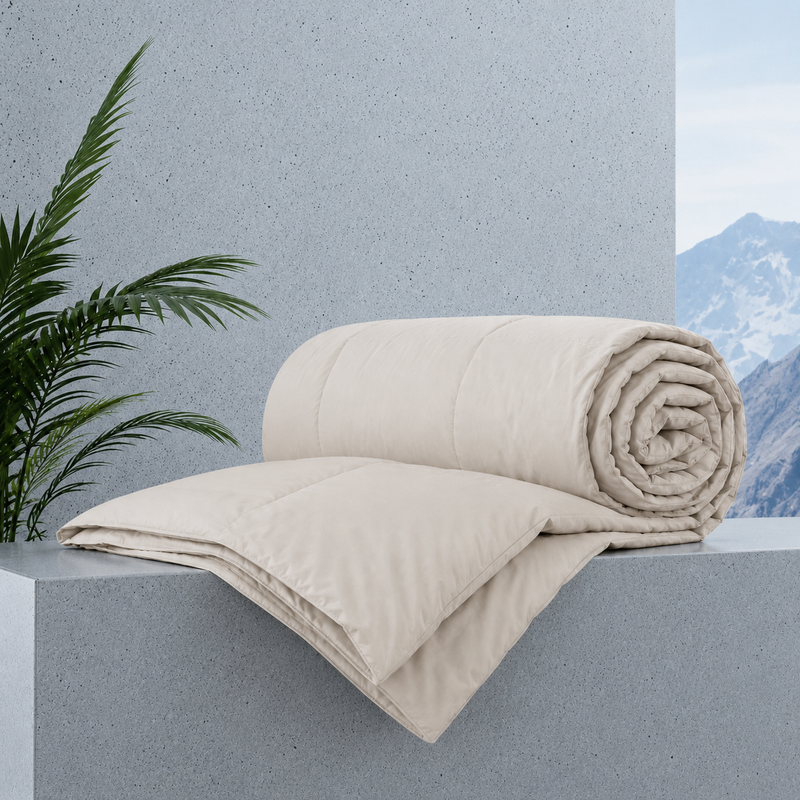
Baffle box construction also matters. Sewn-through baffles keep fill evenly distributed while creating channels that improve air circulation. The Warmy & Tummy summer breeze down comforter features a breathable cotton shell designed to work in harmony with the natural down fill.
Mistake #5: Buying Based on Marketing Claims Instead of Material Science
Terms like “cooling technology” and “climate control” sound impressive but often lack substance. Many products use chemical treatments that wash out after a few cycles or simply don’t perform as advertised. Instead of falling for marketing buzzwords, focus on verifiable material properties.
Natural fibers have inherent temperature-regulating characteristics that don’t degrade over time. Cotton breathes naturally, wool manages moisture vapor before it becomes liquid sweat, and bamboo-derived fabrics wick moisture away from the body. These properties are built into the fiber structure itself, not added through treatments. When evaluating options, ask what the comforter is actually made from and how those materials function at a structural level. Warmy & Tummy prioritizes all-natural materials with proven thermoregulation properties over synthetic “innovations” that promise more than they deliver.
FAQ
What material is best for hot sleepers?
Natural materials like cotton percale, bamboo-derived viscose, lightweight down, and wool offer the best breathability and moisture management for hot sleepers. These fibers allow continuous airflow and prevent humidity buildup.
How do I know if a comforter is truly cooling?
Look beyond marketing claims to the actual materials and construction. Natural fibers, breathable weaves, and appropriate fill power (around 650 for down) indicate genuine temperature regulation rather than temporary cooling sensations.
Can a lightweight comforter still keep me warm?
Yes. High-quality down with good fill power provides warmth through loft and insulation without excessive weight. The key is choosing materials that trap just enough air for comfort while allowing excess heat and moisture to escape.
References
[1] Antipodean Home. “Cooling vs Breathable Comforters: Why ‘Cooling’ Fails Hot Sleepers.” https://antipodean-home.com/a/blog/cooling-vs-breathable-comforter
[2] Sleep Foundation. “Best Cooling Comforters of 2026.” https://www.sleepfoundation.org/best-bedding/best-cooling-comforter
[3] Antipodean Home. “Cooling vs Breathable Comforters: Why ‘Cooling’ Fails Hot Sleepers.” https://antipodean-home.com/a/blog/cooling-vs-breathable-comforter
[4] Sleep Foundation. “Best Cooling Comforters of 2026.” https://www.sleepfoundation.org/best-bedding/best-cooling-comforter