



Waste disposal is one of the most repetitive tasks in a kitchen. Food packaging, scraps and other rubbish are handled throughout meal preparation, so the position and movement of the bin can make a noticeable difference to everyday convenience.
Instead of leaving a container on the floor, pull out bins allow waste storage to be integrated into cabinetry. The bin remains concealed when not in use and can be brought forward when needed.
Bringing the Bin Closer to the User
A deep cabinet can make a loose bin awkward to reach, particularly when other items are stored in front of it.
A pull-out mechanism brings the waste container towards the cabinet opening. This can reduce reaching and make it easier to lift out the bucket when changing a liner.
The benefit is simple: the storage comes to you rather than requiring you to reach into the cupboard.
A Cleaner-Looking Kitchen Layout
Freestanding rubbish bins occupy visible floor space and may interfere with movement in compact kitchens.
Installing the kitchen rubbish bin inside cabinetry can keep the room visually less cluttered.
Kitchen rubbish bin placement inside a cabinet may be especially useful in open-plan kitchens where the cooking area is continuously visible from dining or living spaces.
Concealed Does Not Mean Inaccessible
The bin still needs to remain convenient.
Position it near the main work zone
A concealed waste system is most useful when installed close to where rubbish is generated. Locating it near a preparation bench or sink can reduce unnecessary movement during cooking.
Waste Separation Becomes Easier
Some pull-out systems contain more than one container.
This arrangement can help households separate general waste and recycling without placing multiple standalone bins around the kitchen.
Before choosing a configuration, consider local disposal habits and how much volume each waste stream typically generates. Equal-sized buckets are not automatically necessary.
Under-Sink Placement Can Save Other Cabinet Space
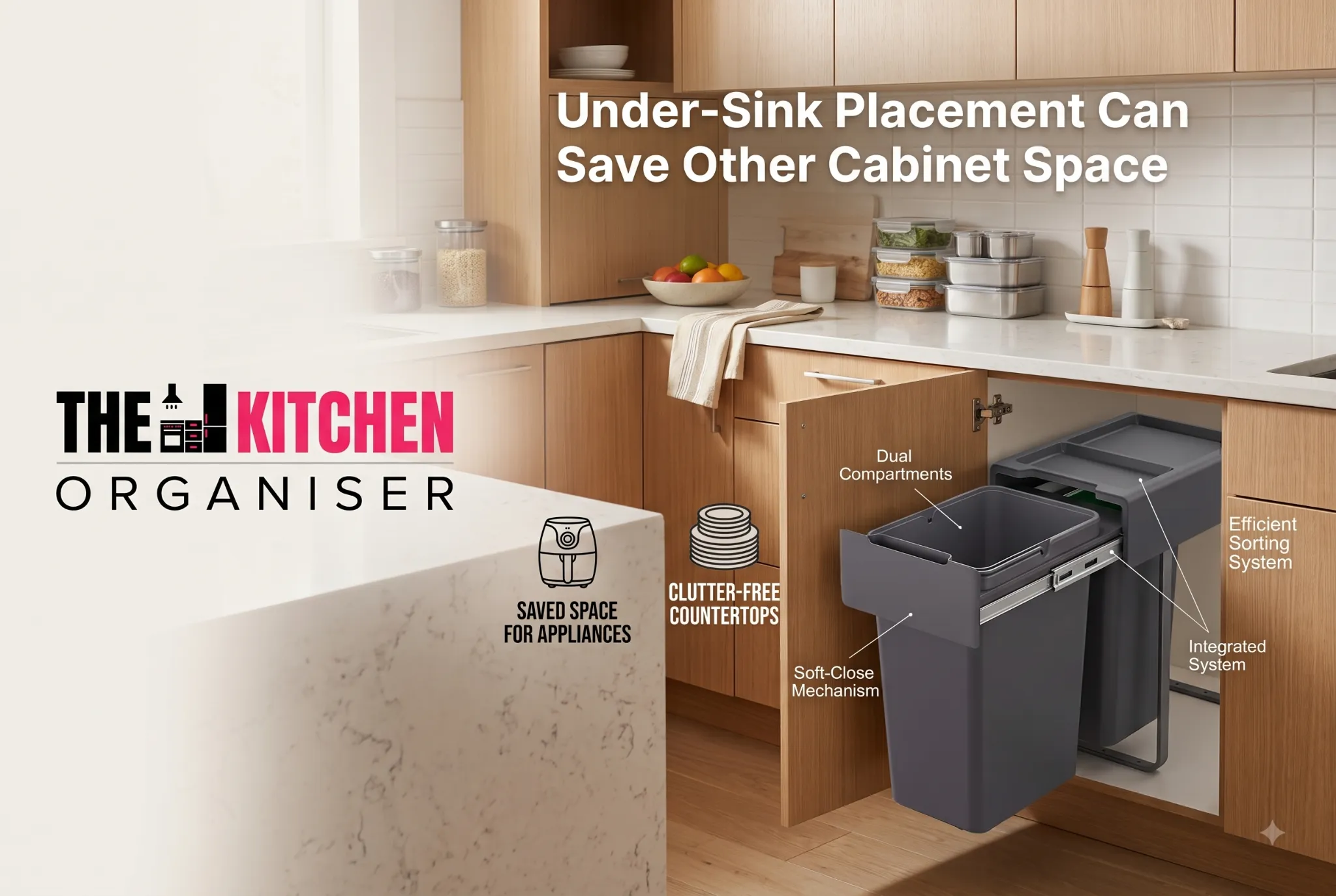

The area beneath the sink is often difficult to use efficiently because plumbing interrupts the cabinet.
A pull out bin under sink can make use of available space while leaving other cupboards for cookware, pantry items or appliances.
However, a pull out bin under sink needs to be measured carefully. Pipe locations and sink-bowl depth can reduce the available installation area.
Useful measurements include:
- Internal cabinet width
- Cabinet depth
- Available height
- Position of waste pipes
- Door-hinge clearance
- Space needed for runners
- Sink-bowl projection
Pull-Out Systems Can Improve Access to Liners
Removing a full liner from a loose bin at the back of a cupboard can be awkward.
With a pull-out arrangement, the bucket can generally be accessed closer to the front of the cabinet. Depending on the system, removable containers may also make cleaning more straightforward.
Pull out bins should still have enough surrounding clearance for easy removal. A tightly packed cabinet can reduce some of the convenience the system is intended to provide.
Consider Capacity Alongside Convenience
A compact mechanism may fit perfectly but provide less waste capacity than the household needs.
Before buying, estimate how frequently the existing bin is emptied. If it fills several times each day, downsizing significantly may become frustrating.
Multiple Containers Need Balanced Sizing
Recycling volume can differ from general waste.
Match capacity to household habits
Observe what fills your current bin fastest over several days. This practical check can help you decide whether a two-bin arrangement needs equal containers or whether one waste stream should receive more capacity.
Installation Dimensions Matter
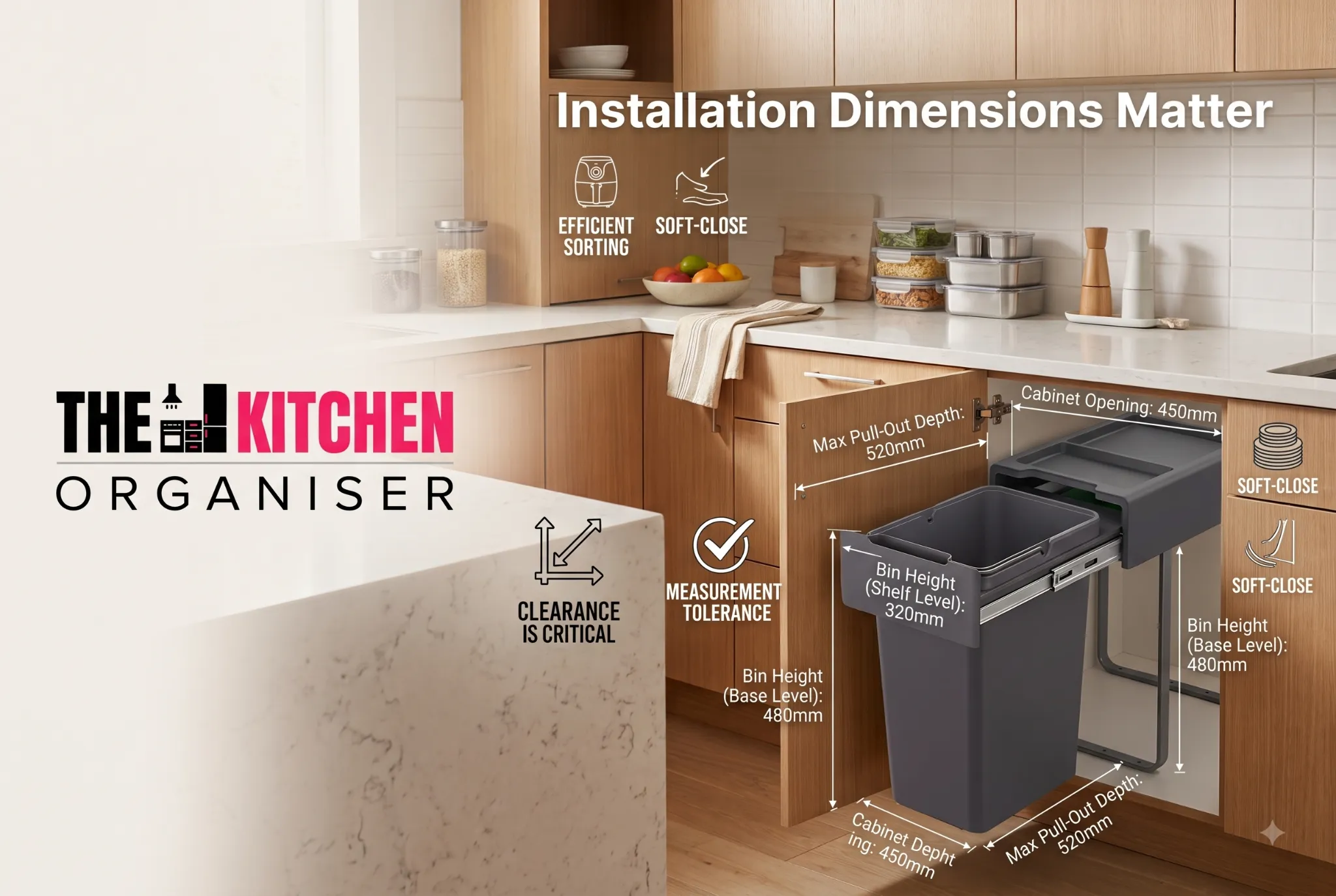
A pull-out system includes more than the visible bucket. Frames, runners and mounting components also occupy space.
Measure against the complete product specification and check where cabinet hinges or internal supports sit.
Kitchen rubbish bin systems that fit properly can operate smoothly, while a near-fit may lead to interference when the mechanism is opened.
Keep the Surrounding Cabinet Simple
Avoid surrounding the bin with numerous loose bottles, bags and cleaning products.
Leaving a clear operating path helps the mechanism move freely. If cleaning products also need to remain under the sink, group them in compact storage that does not intrude into the bin’s movement area.
This makes a pull out bin under sink easier to use without sacrificing all available storage.
Why Choose Us
Kitchen Organisers offers waste-storage options for homeowners seeking to integrate bins into kitchen cabinetry. Shoppers can compare product dimensions and configurations against their cabinet space rather than relying on exterior appearance alone.
This is particularly useful for pull-out installations because fit, movement and bucket capacity all need to work together.
About Us
Kitchen Organisers focuses on practical products for improving the use of kitchen storage space. Pull-out waste solutions form part of a broader approach to keeping everyday kitchen functions organised within cabinetry.
For households exploring pull out bins, measuring first and thinking about daily waste habits can help identify a system that is convenient after installation, not just one that looks suitable online.
Conclusion
Pull-out bins can simplify waste management by bringing the container forward, keeping rubbish concealed and making better use of cabinet space.
The best result comes from matching the system to the cabinet dimensions, plumbing, household waste volume and preferred location. A well-planned installation can turn a routine kitchen task into a noticeably smoother part of the day.