



Professional cleaners regularly encounter jobs where ordinary wiping methods are not the best first choice. Fire restoration, fireplace contamination and smoke-damaged interiors can leave fine soot across walls, ceilings and other surfaces. For these situations, Chemical Sponges provide a convenient dry-cleaning method that allows cleaners to remove loose residue before introducing moisture.
The value of these sponges is not based on complicated machinery. Their usefulness comes from simplicity, control and the ability to work directly on affected surfaces. For professional cleaners managing residential, commercial or restoration projects, that can make them a useful addition to a specialist cleaning kit.
Why Soot Requires a Specialist Approach
Soot behaves differently from normal household dust.
It consists of fine particles generated during combustion, and those particles can spread well beyond the original source. They may appear on walls, ceilings, corners, fixtures and surfaces that were never directly exposed to flames.
Conventional wet wiping can sometimes move soot across a surface. This is particularly problematic when the contamination is fine and dry.
Professional Cleaners Need to Consider
- Type of surface
- Severity of contamination
- Paint finish
- Whether residue is dry or oily
- Size of the affected area
- Presence of fire damage
- Need for later repainting or sealing
- Indoor safety conditions
No single cleaning method is appropriate for every fire or smoke event.
The Advantage of Dry Cleaning
One of the main reasons restoration professionals use a soot sponge is that it can be used without adding water during the initial soot-removal stage.
That matters because moisture changes how particles behave.
Dry cleaning allows technicians to remove as much loose contamination as practical before deciding whether other cleaning methods are necessary.
Benefits for Professional Workflows
Using a dry sponge may help with:
- Initial surface assessment
- Controlled removal of fine residue
- Cleaning walls and ceilings
- Reducing unnecessary wetting
- Working around areas where liquid application is inconvenient
- Preparing surfaces for additional restoration
It also makes it easier to divide large projects into manageable sections.
Faster Visual Assessment
Professional restoration involves constant assessment.
A cleaner needs to determine whether contamination is superficial or whether a wall, ceiling or other material needs more extensive treatment. Removing the top layer of soot provides a clearer view of the underlying surface.
This can influence later decisions regarding cleaning solutions, stain blocking, repainting or material replacement.
Useful Across Different Cleaning Environments
A soot sponge may be relevant in a variety of professional situations rather than only major fire restoration.
Examples include:
Residential Properties
Smoke may result from fireplaces, cooking incidents, heaters, candles or small fires.
Commercial Properties
Restaurants, workshops, warehouses and other premises may occasionally develop smoke-related residue requiring specialist cleaning.
Property Management
Rental properties may need cleaning following tenant damage, fireplace use or isolated smoke incidents.
Restoration Projects
Specialist contractors may use dry-cleaning sponges as one step in a larger remediation process.
Correct Technique Matters
Professional equipment still requires good technique.
The sponge should generally be used dry during soot removal. Gentle strokes are preferable to aggressive scrubbing, particularly on painted or delicate surfaces.
The cleaner should continuously monitor both the sponge and the material being treated.
Basic Professional Procedure
- Inspect the affected area.
- Identify potentially delicate surfaces.
- Protect nearby flooring and furniture.
- Conduct a test patch.
- Work in small sections.
- Use gentle, controlled wiping.
- Keep contaminated portions away from clean surfaces.
- Reassess after dry residue has been removed.
Documentation can also be useful on commercial or insurance-related restoration projects.
Reducing Cross-Contamination
Soot cleanup is not simply about making one wall appear cleaner.
A poorly managed process may transfer residue to floors, furniture, tools or neighbouring rooms. Professional cleaners therefore consider containment and work sequencing.
A smoke sponge should be part of a controlled process rather than used randomly around a property.
Helpful practices include:
- Establishing clean and contaminated work zones
- Protecting flooring
- Bagging heavily contaminated disposable materials
- Cleaning tools between areas
- Avoiding unnecessary foot traffic
- Working systematically through the property
These steps support a more organised restoration project.
Chemical Sponges and Surface Preparation
After dry soot has been reduced, additional work may be necessary.
The next stage depends on the material, contamination level and intended finish.
Possible steps can include:
- Further surface cleaning
- Odour management
- Sealing
- Stain-blocking preparation
- Repainting
- Replacement of severely affected materials
Chemical sponges should therefore be viewed as a specialist cleaning tool rather than a complete solution to every form of smoke damage.
When Professionals Should Escalate the Job
A small surface cleaning project and major fire restoration are not comparable.
Professional cleaners should recognise situations requiring specialised remediation or additional trades.

These may include:
- Structural fire damage
- Contaminated insulation
- HVAC contamination
- Electrical damage
- Extensive odour penetration
- Hazardous combustion residue
- Large-scale commercial fire events
Correctly defining the scope protects both the cleaner and the client.
Why Choose CleanCare Australia?
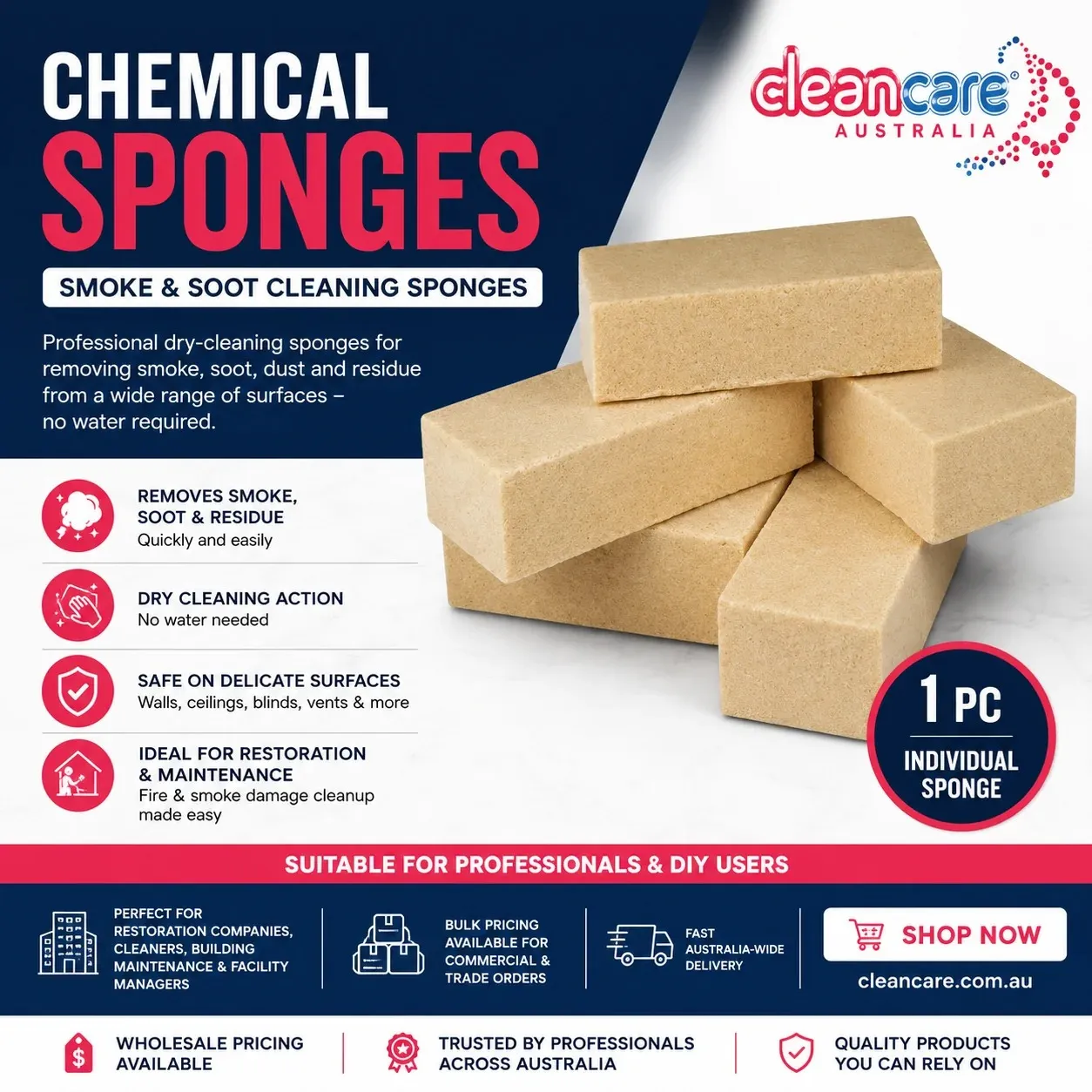
CleanCare Australia supplies cleaning products and equipment for professional, commercial and domestic users, with ranges covering cleaning chemicals, machinery, accessories and specialist products. For restoration contractors or cleaning businesses seeking a convenient smoke sponge, its smoke and soot dry-cleaning sponge is specifically presented for smoke, soot, dust and residue removal on surfaces such as walls and ceilings.
Conclusion
Professional cleaners use specialist tools because different contaminants require different methods. Soot is particularly challenging because fine residue can spread when handled incorrectly. A dry-cleaning sponge gives professionals a straightforward method for reducing loose contamination while maintaining better control over the cleaning process. Used as part of a systematic restoration workflow, it can help cleaners prepare smoke-affected surfaces for whatever treatment comes next.