

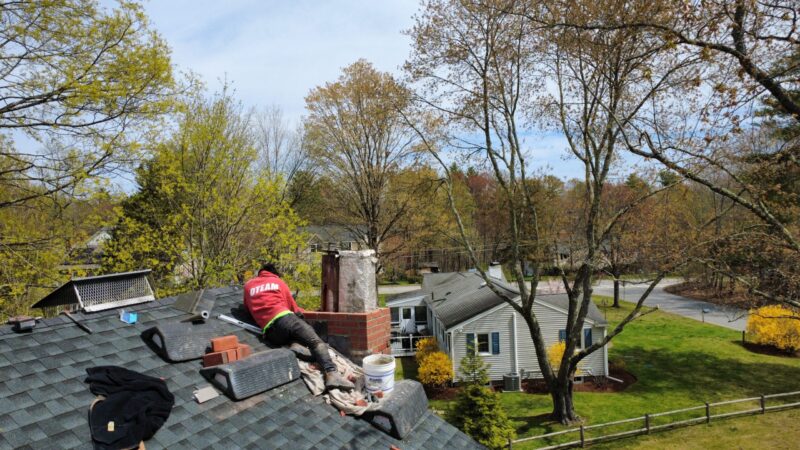
There is something timelessly romantic about a New England home in the dead of winter. Crimson brick chimneys rise above snow-dusted gables, sending lazy plumes of woodsmoke into crisp coastal air. Whether you own a historic Colonial built when George Washington was still in boots or a contemporary mountain retreat, your chimney is far more than a charming architectural accent. It is a hardworking exhaust engine operating under extreme conditions. New England masonry is built tough, but our brutal weather pushes chimney materials to their physical limits year after year.
The Freeze-Thaw Battleground Above Your Roofline
Living in New England means experiencing all four seasons, sometimes within a single forty-eight-hour period. This drastic temperature oscillation creates what technicians call the freeze-thaw cycle, masonry’s greatest enemy. Bricks and mortar are naturally porous, acting like hard ceramic sponges that absorb liquid during rainy autumn days and slushy winter thaws. When the ambient temperature drops below freezing overnight, that trapped water expands by about 9% inside the brickwork.
Over consecutive seasons, this relentless microscopic expansion causes spalling, a defect in which the hard outer face of the brick pops off completely, exposing the soft, porous interior. Meanwhile, the mortar joints between the bricks disintegrate into crumbling powder, weakening the structural integrity of the entire stack. You might also notice a white, powdery glaze coating your exterior brickwork—a condition known as efflorescence, which occurs when trapped moisture leaches water-soluble salts out to the surface. Ignoring these subtle signs of freeze-thaw damage usually leads to tilting stacks, structural collapse, and exorbitant masonry rebuilding costs.
Unmasking Moisture Invasion and Flashing Failures
Water doesn’t just damage the bricks on the outside; it actively seeks pathways into your roof assembly and interior living spaces. The most vulnerable junction on any roof is where the vertical chimney meets the sloping roofline. To keep driving rain and melting ice banks at bay, technicians weave custom lead or copper step flashing under the shingles and seal it with counter-flashing embedded directly into the mortar joints.
In New England, heavy ice dams and howling, wind-driven rain relentlessly test these roof seals. When old flashing sealant dries out, splits, or pulls away from the brick, water cascades down wall framing, rotting structural timber and ruining interior plaster before you ever see a drip on the ceiling. At the very top of the stack, a cracked concrete chimney crown acts like an open front door for water. Installing a full-coverage stainless steel chimney cap and applying a vapor-permeable, professional-grade masonry sealer creates a breathable shield that sheds rain while letting internal moisture vapor escape freely.
Creosote, Flue Liners, and Thermal Shock Hazards
While exterior weather batters your stack, internal combustion hazards brew inside the flue. Every time you burn seasoned oak, maple, or cordwood in your fireplace, smoke rises up the cold flue and leaves behind sticky, flammable deposits known as creosote. In cold climates, smoke cools rapidly as it rises, causing creosote to build up faster. Left unchecked, creosote bakes into a shiny, tar-like glaze that can easily ignite into a roaring, three-thousand-degree chimney fire.
Extreme heat spikes cause severe thermal shock, cracking traditional terra cotta clay flue tiles that line older chimneys. Once a clay liner shatters, fiery embers and invisible carbon monoxide gas can migrate into adjacent wall framing and interior rooms. Upgrading to a heavy-gauge, insulated stainless steel flue liner restores proper draft dynamics and ensures combustion exhaust moves smoothly out of your building without endangering occupants or the structure.
Historic Masonry versus Modern Code Standards
New England boasts some of the country’s most beautiful historic architecture, from Federal-style townhomes to rustic timber-frame capes. However, builders often used soft lime mortar and unlined brick flues, which do not meet modern building codes or heat requirements. Repairing an eighteenth-century chimney with modern, high-strength Portland cement can accelerate structural damage because modern mortar is too hard and unyielding for soft historic brickwork.
Preserving these historic hearths requires specialized technical knowledge, precise repointing techniques, and custom relining solutions that protect historic aesthetics while guaranteeing code compliance. Whether you operate a residential wood stove, a commercial heating boiler, or an open hearth fireplace, maintaining proper clearance to combustibles and ensuring flue integrity are non-negotiable for safe operation.
Protecting Your Investment Across Our Service Areas
Chimney care isn’t one-size-fits-all, as coastal salt air, mountain snow loads, and urban wind tunnels each create unique mechanical challenges. Properties situated near ocean bluffs suffer from accelerated metal flashing oxidation and wind-driven rain penetration, while inland structures deal with deep frost lines and severe ice dam accumulation. Understanding how local microclimates impact your chimney is essential for scheduling timely preventive maintenance before winter storms strike.
Regular technical evaluations, video flue scans, and preventive repairs ensure your hearth system remains efficient, safe, and fully operational year-round. To verify technical coverage or schedule a thorough multi-point safety inspection for your residential or commercial property, explore Our Service Areas to connect with certified local technicians ready to help.
Preserving Your Hearth for Seasons to Come
A sturdy, well-maintained chimney is the warm heart of any New England home, providing reliable heat, rich architectural character, and peace of mind during the coldest months. While the region’s climate is famously unforgiving, staying proactive with annual inspections, moisture protection, and flue maintenance ensures your masonry remains rock solid for generations. Do not wait for a cold downdraft, smoky living room, or ceiling leak to tell you there is a problem above your roofline. Contact local chimney specialists today to schedule a comprehensive chimney sweep and safety evaluation, keeping your home warm, secure, and ready for whatever weather New England sends your way.